If you’ve been paying attention lately, it can feel like everything is changing at once. Jobs are evolving, tools are updating constantly, and AI is now doing things that once felt uniquely human. It’s exciting… and also a little unsettling.
One of the biggest questions people are quietly asking is: How do I stay relevant when the world keeps shifting?
The good news is that while job titles, platforms, and tools change fast, some skills age incredibly well. These are the skills that compound over time — and they matter even more in an increasingly automated world.
Tools change. Skills compound.
Technology moves in cycles. Software gets replaced. Platforms rise and fall. What feels essential today can be outdated in a few years.
But skills work differently. Certain abilities don’t expire — they stack. The more you use them, the more valuable they become, regardless of what tools you’re using at the moment.
This matters now more than ever, because automation and AI are taking over many technical and repetitive tasks. That doesn’t make humans less valuable — it changes where our value shows up.
The skills that age well
Here are a few skills that consistently hold their value, even as jobs evolve:
1. Learning how to learn
The ability to pick up new concepts, tools, or ways of thinking is one of the strongest long-term advantages you can have. It’s not about mastering everything — it’s about staying curious and adaptable.
2. Critical thinking and judgment
AI can generate answers, but it can’t always evaluate context, nuance, or consequences. Humans who can ask good questions, connect dots, and make thoughtful decisions stand out.
3. Communication
Clear writing, thoughtful conversation, and the ability to explain ideas simply are powerful skills in any role. As information increases, clarity becomes more valuable.
4. Emotional intelligence and empathy
This is becoming a major differentiator. As more work becomes automated, human-centered skills like empathy, collaboration, and understanding others’ perspectives matter more — not less. Being able to work well with people, navigate tension, and build trust is hard to automate.
5. Adaptability
Careers are no longer linear. Being comfortable with change, uncertainty, and reinvention is a skill in itself — and one many people are actively learning right now.
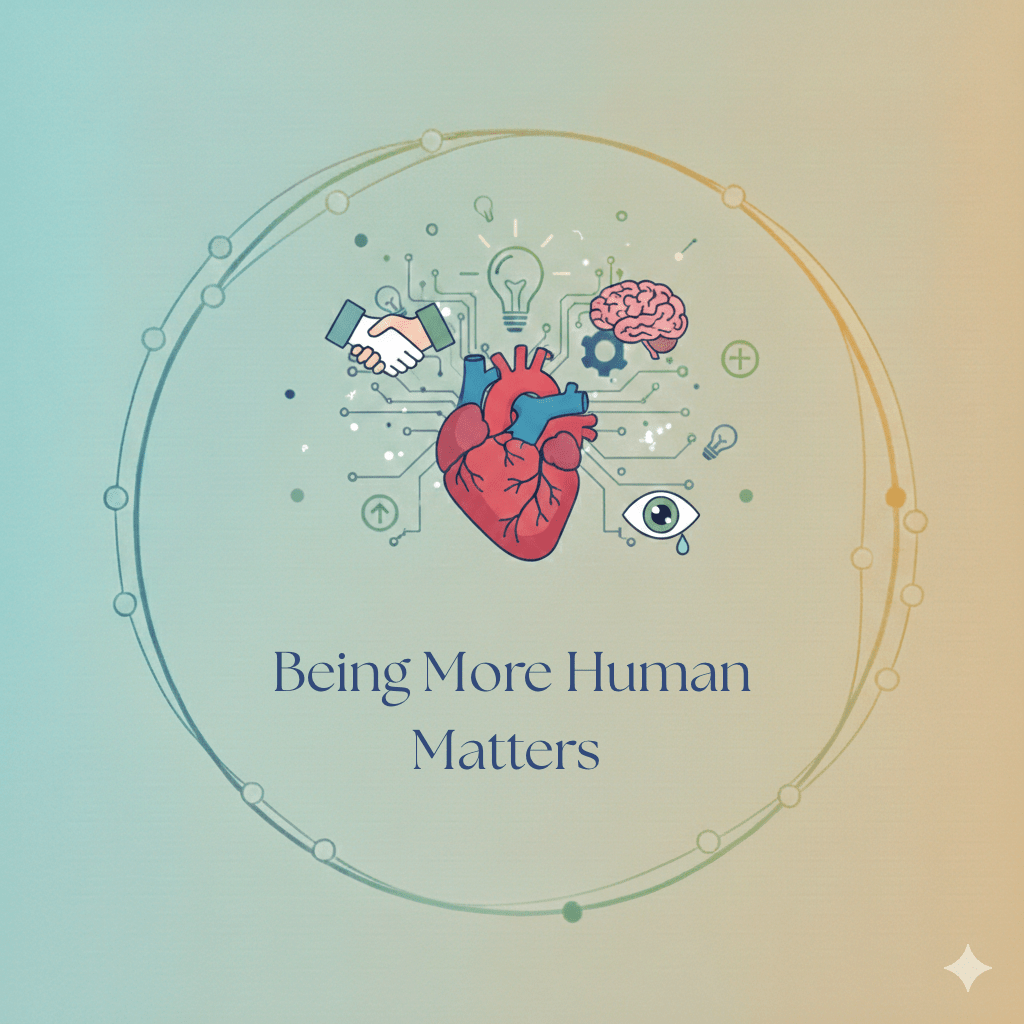
Why being more human matters
There’s a quiet irony in all of this: as machines get smarter, being human becomes more important.
AI is great at generating content, analyzing data, and speeding things up. But it doesn’t replace lived experience, emotional awareness, or moral judgment. The people who shine in the years ahead won’t just be the best at using tools — they’ll be the ones who bring humanity into the work.
That might look like:
- asking better questions
- listening more carefully
- understanding impact, not just output
- knowing when not to automate
In other words, relevance won’t come from trying to out-machine machines. It will come from leaning into the things that make us human.
A quiet shift worth paying attention to
For many people, staying relevant doesn’t mean chasing every new trend or tool. It means investing in skills that carry forward — even when roles, industries, or life circumstances change.
If you’re in a transition, or feeling a little behind, this can be reassuring. You don’t have to learn everything. You just have to keep learning something — thoughtfully and intentionally.
As one small example, getting curious about new technology (like AI) doesn’t require mastery. Sometimes it’s enough to understand what exists and why it matters. I explored that idea in a separate post breaking down what tools like ChatGPT, Gemini, and Claude actually are — not as a how-to, but as a starting point for context and learning.
Because relevance isn’t about speed. It’s about direction.
References & Further Reading
If you’d like to explore some of the ideas mentioned in this post more deeply, these books and articles provide thoughtful context around learning, skills, and staying relevant in a changing world:
- World Economic Forum – Future of Jobs Report: Explores how automation and AI are reshaping work, and highlights the growing importance of human skills like critical thinking, adaptability, and emotional intelligence.
- Cal Newport – Deep Work: A look at why focused thinking, learning, and high-quality cognitive skills are becoming more valuable in an increasingly automated and distracted world.
- Daniel Goleman – Emotional Intelligence: A foundational book on why empathy, self-awareness, and interpersonal skills matter — especially as technical tasks become easier to automate.
- Yuval Noah Harari – 21 Lessons for the 21st Century: Discusses uncertainty, technological acceleration, and why learning how to adapt may be one of the most important skills of our time.
- MIT Sloan Management Review – Articles on AI and human judgment Explores the balance between AI-generated output and human decision-making in modern organizations.
 LifePivot Lab
Leave a comment